

Introduction
Welcome to part 1 of our “AI for Educators” journey!
In this module, we will lay the foundation for understanding artificial intelligence and its potential to revolutionize and transform education. Many educators hear the term “AI” and imagine complex algorithms or futuristic robots, or robot vacuum cleaners. 🙂
At its core, AI is about using technology to solve problems and enhance human capabilities. In this first part of the course, we will talk about AI, explore some of its latest applications in education and address some ethical considerations that rises with this powerful technology.
Learning Objectives
By the end of this part, you will be able to:
- Define artificial intelligence and its core concepts.
- Identify current applications of AI in Education.
- Discuss the ethical implications of AI in educational settings.
1: What is AI?
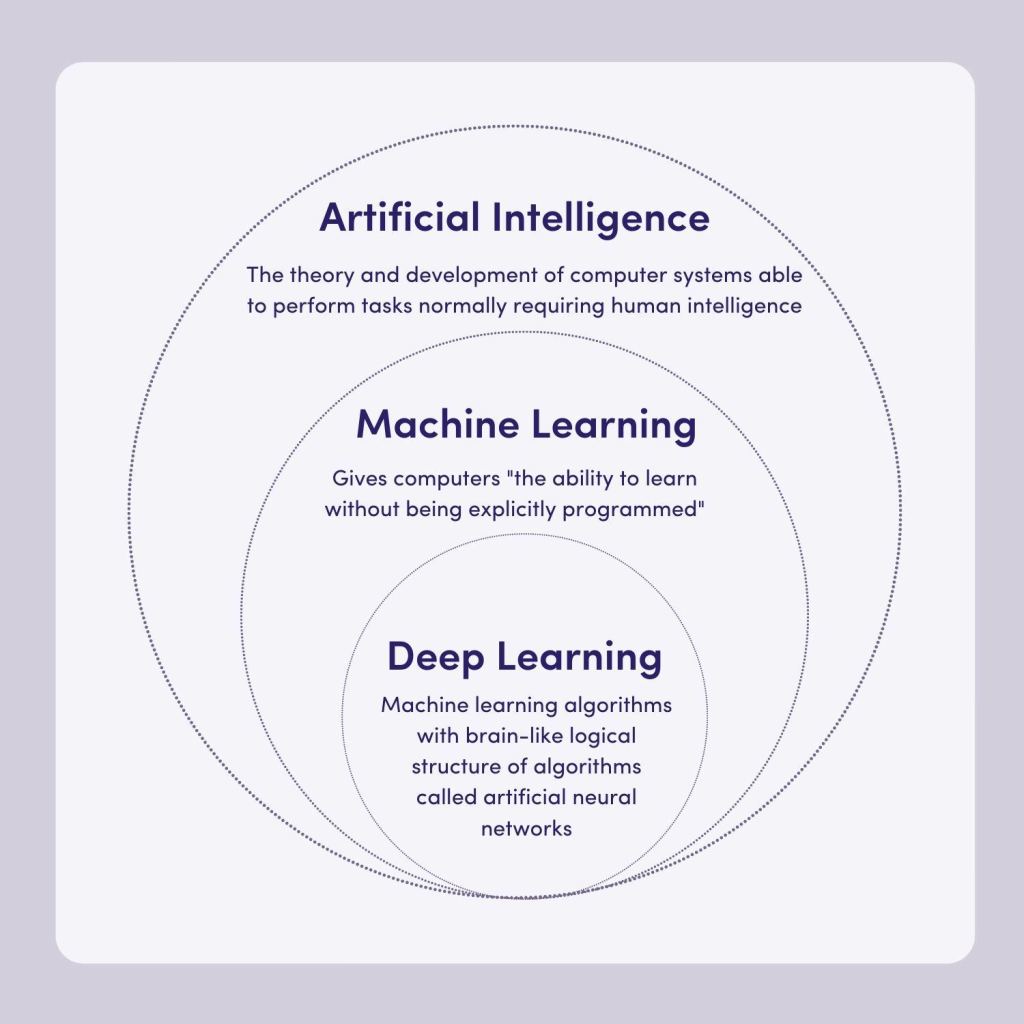
Let’s break down the jargon. AI (Artificial Intelligence) refers to the ability of machines to perform tasks that typically require human intelligence. Think of it as teaching a computer to learn and solve problems.
Key Concepts
- Machine Learning (ML): Teaching computers to learn from data without explicit programming.
- Natural Language Processing (NLP): Enabling computers to understand and process human language.
- Deep Learning: A subset of machine learning that uses neural networks to analyze complex data.
Activity
Take a moment to reflect. Where do you encounter AI in your daily life?
Share your examples in the comments below!
2: AI in Education– An Overview
Artificial intelligence (AI) is rapidly transforming the landscape of education, offering a wide array of tools and applications that impact students, educators, and institutions alike. From personalized learning platforms that adapt to individual student needs and paces to AI-powered tutoring systems providing tailored feedback, AI aims to enhance the learning experience. Furthermore, AI assists educators with administrative tasks like grading and lesson planning, freeing up their time for more direct student interaction.
AI is already making waves in education. Here are some examples:
- Personalized Learning Platforms: AI can analyze student data to tailor learning paths and provide customized content.
- Automated Grading and Feedback: AI can streamline assessment by automatically grading assignments and providing detailed feedback.
- Intelligent Tutoring Systems: AI-powered tutors can provide personalized support and guidance to students.
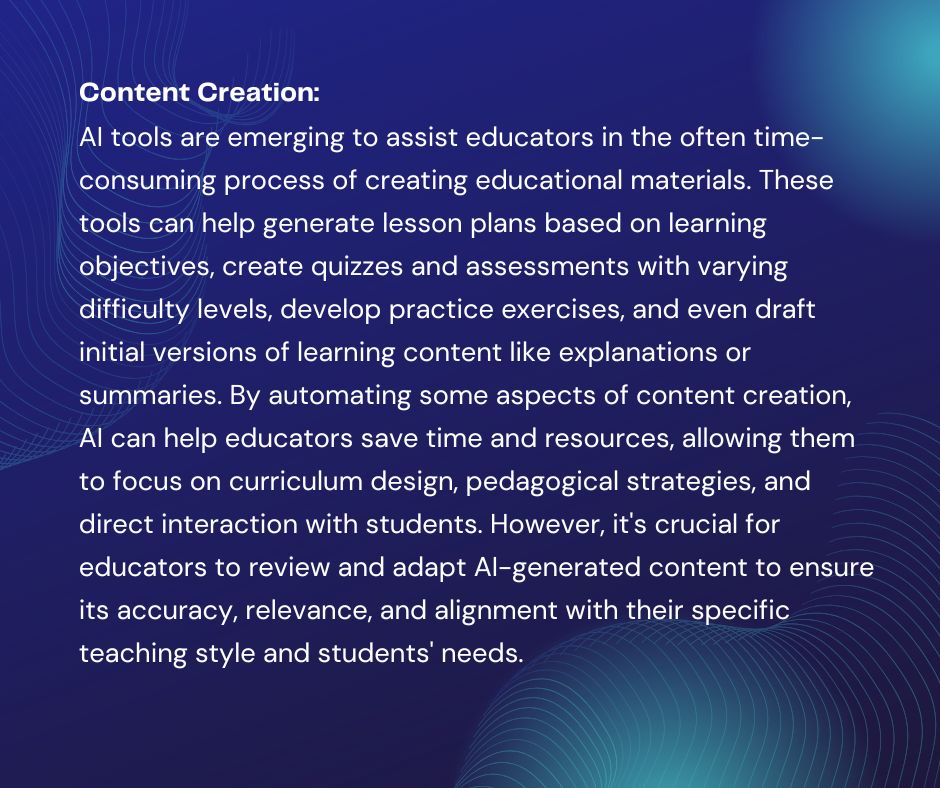
- Content Creation: AI can assist educators in generating lesson plans, quizzes, and other educational materials.
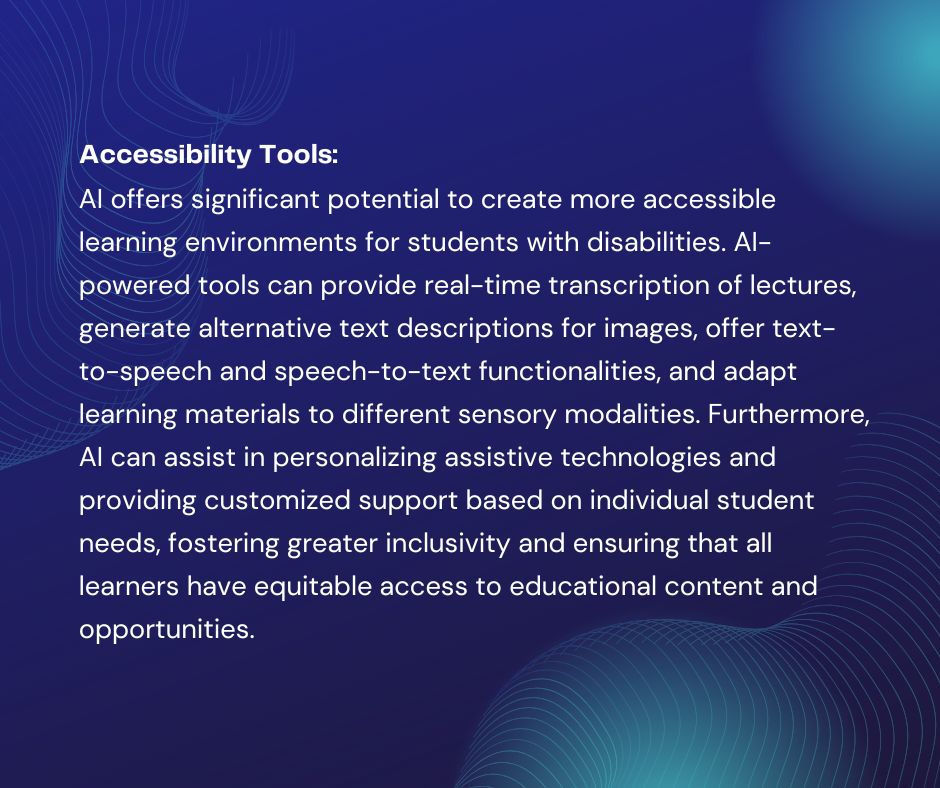
- Accessibility Tools: AI can help create accessible learning environments for students with disabilities.
Check-in
What are some potential benefits you see from these applications?
3: Ethical Considerations
While the integration of AI in education presents exciting opportunities for increased efficiency, personalization, and accessibility, it also raises important considerations around data privacy, algorithmic bias, and the evolving role of human educators in a technologically enriched learning environment. Basically with great power comes great responsibility.
It’s crucial to consider the ethical implications of AI in education. Here are some items to keep in mind:
- Bias and Fairness: AI algorithms can perpetuate existing biases in data, leading to unfair outcomes.
- Privacy and Data Security: Student data must be protected and used responsibly.
- The Role of the Teacher: AI should be used to support, not replace, the role of the teacher.
- Digital Equity: Ensuring all students have access to AI-powered tools and resources.
Activity
Imagine an AI grading tool that consistently gives lower scores to students from a specific demographic. What ethical concerns arise? Discuss in the comments.
Check-in
How can educators ensure the ethical use of AI in their classrooms?
4: Getting Started
Explore
Check out these AI tools for educators:
- Quizizz: While not purely an AI tool in the backend, Quizizz leverages AI to enhance quiz creation and delivery. Educators can input a topic, and Quizizz can automatically generate questions, saving time and offering variety. It also provides AI-powered insights into student performance, highlighting areas where they might be struggling.
- MagicSchool AI: This platform is specifically designed for teachers and offers a suite of AI-powered tools to help with various tasks. These include generating lesson plans, creating rubrics, writing differentiated assignments, drafting IEP goals, and even composing parent emails. It aims to reduce educators’ workload and provide personalized support for their students.
- Diffit: Diffit helps educators differentiate learning materials by taking existing text (like articles or textbook sections) and generating versions at different reading levels. This allows teachers to provide accessible content for all students in their classroom without spending hours rewriting materials themselves.
- SlidesAI.io: This tool integrates with Google Slides and helps educators quickly create visually appealing presentations. By inputting text or a topic, SlidesAI.io can automatically generate slide layouts, suggest relevant images, and format the content, saving educators time on presentation design.
Reflect
What AI application are you most interested in exploring further.
Conclusion
In this first part, we’ve taken the first step in understanding the world of AI in Education. Remember, AI is a tool that can be used to enhance teaching and learning. By staying informed and engaged, we can harness the power of AI to create a more equitable and effective learning and teaching experiences.
 G Education
Leave a comment